The damage most likely occurred when the drive fell while powered on. The user then attempted to switch the drive back on — and here, somewhat paradoxically, the severe damage to the read/write heads probably helped preserve the platter surfaces and therefore the user data. The heads "stuck" to the platters, and the spindle motor was no longer able to turn them. Had the motor managed to spin the platters up, the result would most likely have been fatal destruction. When the drive arrived at our lab for diagnostics, the prognosis was not encouraging — but years of experience and the steady hands of our specialist eventually brought the important data back to life.

+420 608 177 773
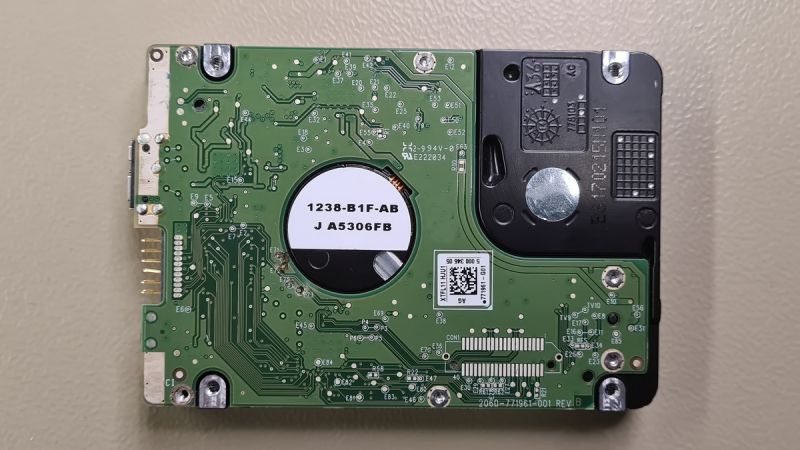
Drive submitted for recovery: Western Digital WD20NMVW, removed from an external enclosure.
PCB: 200-771961-001
Capacity: 2 TB
Symptoms: On power-up, the drive emits barely audible clicking sounds and the motor attempts to spin up.
Problem: Data inaccessible after a drop


A closer look
As the photograph shows, the read/write heads are severely damaged and have inevitably caused at least some damage to the platters as well. Western Digital drives, however, tend to be somewhat more tolerant of this type of damage than some other brands, so as long as the platters are not catastrophically damaged, an attempt at data recovery is definitely worth pursuing.
In this particular case, the situation is further complicated by the drive's construction — specifically by the number of platters and heads. Four platters and eight heads increase the probability of damage, and every hardware operation on the drive must therefore be carried out with the utmost care.
Data recovery from the Western Digital WD20NMVW
Damage of this severity — where the magnetic sliders (the part of each head that rides on a thin air bearing above the rapidly rotating platters) are already partially torn off, and where the high number of platters and heads makes a thorough visual inspection impossible — calls for extreme caution when attempting to free and remove the head stack from the platters. Our experienced specialist managed the procedure successfully. Unfortunately, one of the sliders remained adhered to a platter surface, in a particularly awkward and hard-to-reach location. There are several ways to address this type of problem; the right approach has to be chosen based on the specific situation. This stage is fairly critical, because any oversight, hasty action, or wrong procedure could lead to fatal damage to the drive. For example, missing a stuck slider, fitting new heads, and powering the drive on would inevitably destroy the new heads and most likely cause critical damage to the drive itself.
All the necessary steps, however, were carried out correctly. We then proceeded with modification of the PCB (the drive's electronics), additional firmware-side adjustments, and a backup of the service area. We were on the right track. Once the imaging project was started, we still needed to build a head map, which allows individual heads to be switched on and off during work on the drive. Creating the binary clone took a considerable amount of time, but the final result turned out to be quite respectable.
The customer was extremely pleased — all the more so because another service company had previously given him little hope of recovery. That company, however, was not a data recovery specialist, and this case clearly illustrates why it pays to take a data loss situation directly to a specialised firm.
- Details
- By František Fridrich
- Parent Category: Blog
- From Practice