Interesting news and updates from the world of data recovery across all types of media, including hard drives, SSDs, and more. Engaging reads for both laypeople and professionals in the field.
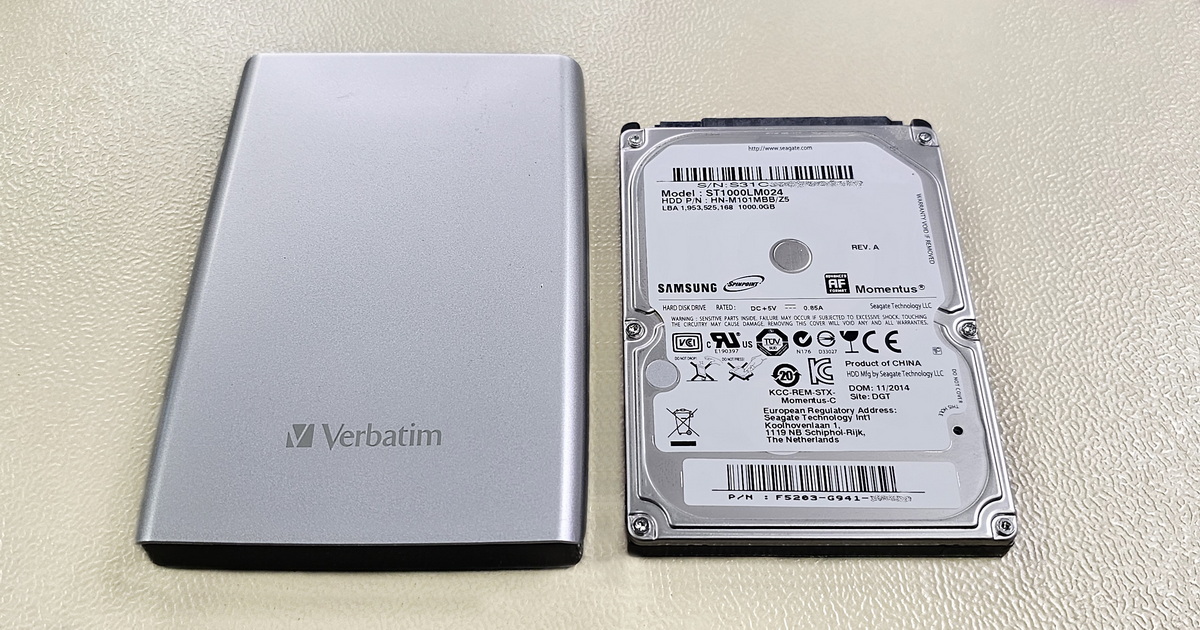
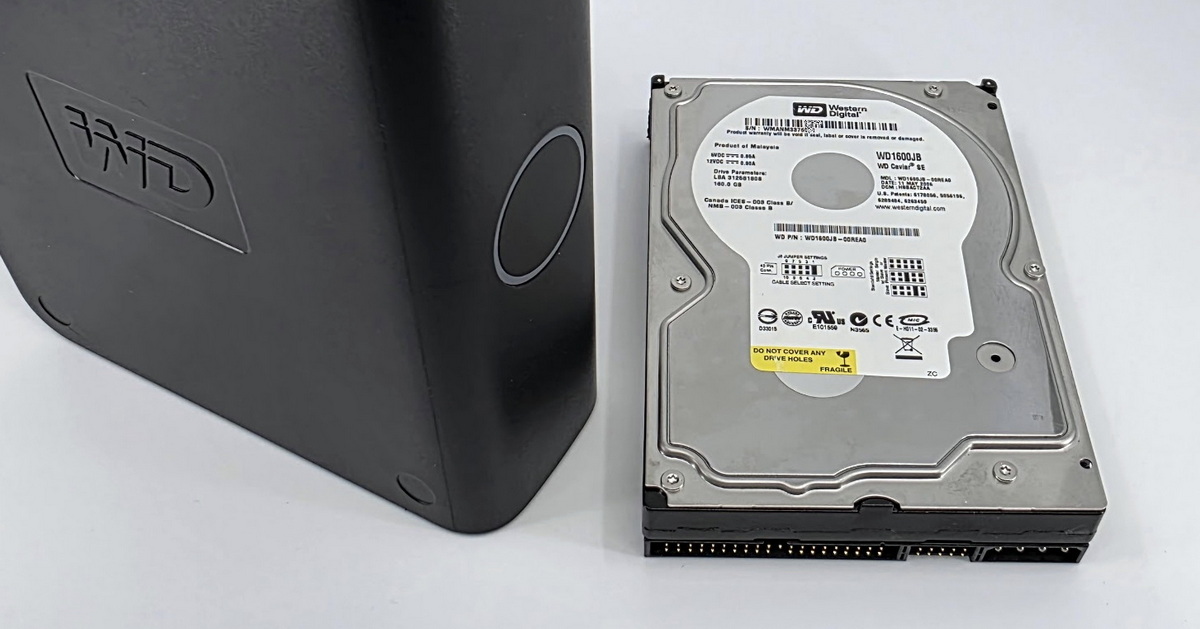
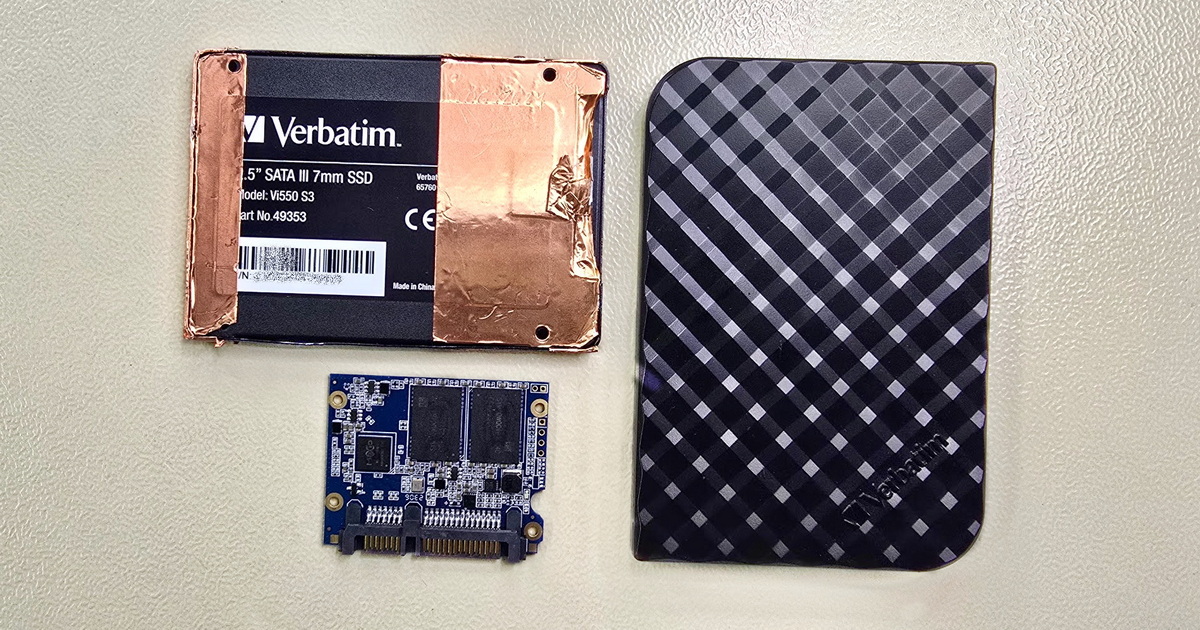
Verbatim hard drives have been on the market for many years and are popular among users, likely due to general brand awareness and the balance between capacity and price. However, Verbatim does not manufacture these hard drives themselves. Inside the plastic case, one may find a hard drive from Seagate, Western Digital, Toshiba, Hitachi, or Samsung. Therefore, data recovery can vary depending on the brand of the internal drive and its symptoms.

The binary system (BIN), which forms all software and hardware in computing, is not an invention of modern times. The binary system was first described in China in the book 'I Ching' more than 3,000 years ago. In the 17th century, the famous mathematician and philosopher Gottfried Wilhelm von Leibniz refined the concept of binary arithmetic. The hexadecimal (HEX) system developed later as a tool for more efficient work with binary data. The decimal system (DEC), which we use every day, is as old as humanity itself and is the foundation of our understanding of numbers.

The biggest technology conference in the world of data recovery took place this year in Spain. A total of 111 experts from 36 countries gathered to acquire new information, share experiences, and establish contacts. Representatives from Czech firms Exalab and Datahelp were in attendance.

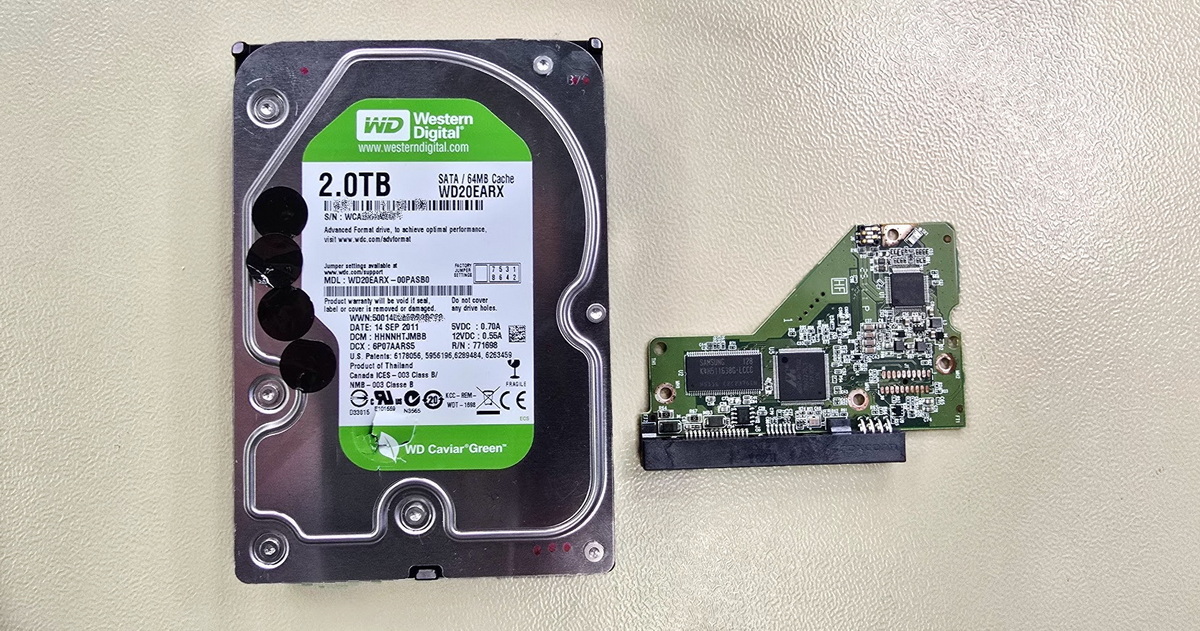
Sometimes it takes very little for important data to teeter on the brink of being lost forever, sending its owner close to a heart attack. Most data recovery cases then become a task for an experienced specialist. Even a seasoned expert could be stumped in many cases without the availability of advanced technologies. This article discusses a modern 4TB hard drive from WD, where the absence of certain technologies could have severely complicated, if not made impossible, the data recovery process.

A damaged mobile phone and a desperate user is a scene we encounter frequently. Regardless of the reason for the mobile phone's failure, data recovery can be a complex task not only for the technician but also for his assistant, capable of peering into the silicon heart of the mobile. Data recovery demands expertise, technological know-how, finesse in handling the hardware, and in many cases, also PC-3000 Mobile - hardware and software from Acelab's laboratories.

An uninitialized disk in the hands of a "daring IT wizard" can spell disaster for data. Whether it's a user's attempt to "repair the disk" or a careless intervention by an IT service lacking the necessary expertise, the result is often the same - extensive disk damage and an increased risk of data loss. In today's digital world, that's definitely not good news. That's why it's crucial in these cases to consult professionals - data recovery experts equipped with the necessary tools, knowledge, and experience.

The mobile phone is currently one of the most important devices we own. It's something like a personal assistant, diary, camera, and communicator, all in one. Without it, we would often feel lost - it is our connection to family, friends, work, and the world. Unfortunately, this dependency on our phone can be a double-edged sword. What if it suddenly breaks or is water damaged? What are the data recovery options?

A hard drive can, after a fall, a collision, or even spontaneous failure, get into a state that can give a curious user with a sharp ear the impression that they can access the inaccessible data themselves. After a while of researching on the internet, loosening those strange screws, and a bit of prying with a screwdriver, "stuck read heads" appear. If the user hasn't destroyed the disk by this point, they're certainly well on their way, if they progress to the next level of the data experiment.

NAND flash memories can be found in most of today's data storage devices, without which personal computers, mobile phones, flash drives, memory cards, and control units would hardly be able to operate. The history of NAND began in 1987 when Toshiba introduced the first NAND flash chip. Widespread expansion of NAND chips was achieved around 2000. Between 2010 and 2015, thanks to reduced production costs and improved reliability, NAND memories began to massively expand. SSDs almost completely replaced system disks in new computers, while the capacities of mobile phones, memory cards, and flash drives increased and prices fell to an acceptable level.

Loss of data can be stressful for everyone. Whether it's important documents, photos, or other files, losing data can pose a big problem. When such a situation arises, it is crucial to avoid rushed attempts at data recovery. Data recovery is often possible, but the correct procedure can be decisive. In this article, we will guide the thought process of a user asking the question "Is it possible to recover files from a disk?"
EXALAB Data Recovery
Microshop s.r.o.
Pod Marjánkou 4
169 00 Praha 6
Česká Republika
Opening hours:
Monday to Thursday
9.00 - 18.00
Friday 9.00 - 17.30
other opening hours are possible upon agreement
Hotline: +420 608 177 773
Office: +420 233 357 122
E-mail: [email protected]
Hotline: +420 608 177 773
Kancelář: +420 233 357 122
E-mail: [email protected]
Opening hours:
Monday to Thursday
10.00 - 18.00
Friday 10.00 - 17.30
other opening hours are possible upon agreement
EXALAB Data Recovery
Microshop s.r.o.
Pod Marjánkou 4
169 00 Praha 6
Česká Republika